
Grain & Powder Processing Static Grounding Systems

The U.S. Chemical Safety Board documented 281 combustible dust incidents between 1980 and 2005. These events killed 119 workers and injured 718 more. Moving grain, flour, and bulk solids through conveyor systems generates electrostatic charge that can ignite suspended particles. Special Technical Services provides continuous ground monitoring systems that protect grain elevators, flour mills, pharmaceutical plants, and food facilities across North America.
Hero Image
Home  /  Industries  /  Grain & Powder Processing Static Grounding Systems

Static Grounding Solutions for Powder and Bulk Solids Operations

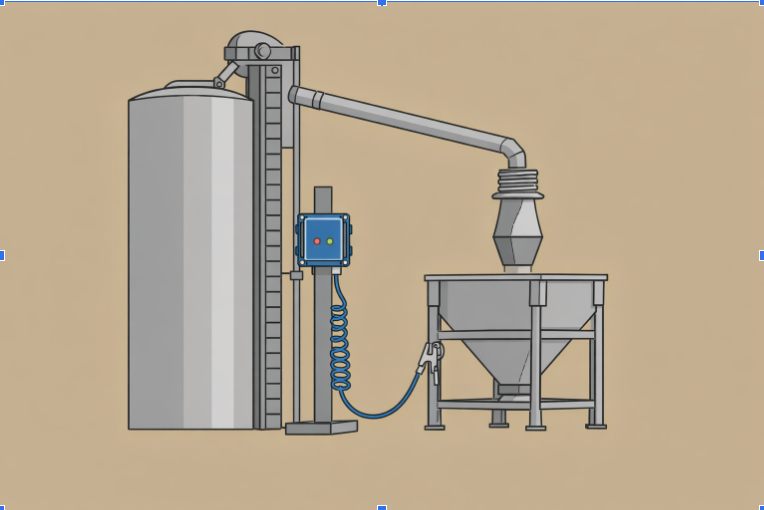
Grain and powder processing creates one of the most dangerous environments for static electricity buildup. Dry materials like wheat, corn, flour, sugar, modified starches, steamed chickpea flour and powder coatings generate electrostatic discharge when they move through tubular drag conveyors, bucket elevators, and pneumatic systems. The friction between particles and equipment surfaces causes triboelectric charging. This charge can reach thousands of volts in seconds.

A dust explosion requires five elements: an ignition source, combustible dust, oxygen, dispersion in air, and confinement. This is known as the dust pentagon. A single spark from electrostatic discharge can trigger a primary explosion. That blast then shakes loose accumulated dust from rafters and equipment, causing secondary explosions throughout the plant. The National Fire Protection Agency standards NFPA 652-654 and NFPA 61 require proper grounding to control this ignition source.

Special Technical Services delivers grounding tools and monitoring equipment that meet NFPA 652-2019 and OSHA 29 CFR 1910.272 requirements. With over 50 years of experience and ISO 9001:2015 certified quality management, STS equipment protects facilities worldwide.

Quick Facts: Grain & Powder Safety

OSHA 29 CFR 1910.272: Grain handling facility standard
NFPA 61: Agricultural and food processing standard
Combustible dust particle size: Under 420 microns
Ground resistance threshold: Less than 10 ohms

Combustible Dust Hazards in Grain and Powder Facilities

Grain and powder processing presents unique combustible dust hazards that require specialized static grounding solutions.

Default Icon

Material Movement Creates Continuous Charging

Every time grain or powder moves through your facility, it generates electrostatic charge. Conveyor systems with stainless steel chains, bucket elevators, augers, and pneumatic transport create constant friction between particles and equipment. High delivery rates increase charge generation. The volume resistivity of dry powders means charges do not dissipate on their own. Blending process equipment, tablet compression machines, and reclaim systems all contribute to this buildup.
Default Icon

Fine Particles Suspend Easily and Ignite Quickly

Grain dust and powder particles smaller than 420 microns can suspend in air at very low concentrations. The minimum explosive concentration for many agricultural dusts is reached quickly in enclosed spaces. Silos, hoppers, tote bins, and dust collection system housings trap these suspended particles. Cohesive powders and powder blends present additional challenges for proper handling.
Default Icon

Equipment Components Become Isolated from Ground

Maintenance and cleaning can break bonding connections between metal components. Vibration loosens fittings over time. Paint, rust, and powder buildup create high-resistance paths that block proper grounding. When equipment is reassembled after cleaning, workers may miss connections. Stainless Steel 304 equipment still requires proper bonding to maintain electrical continuity.
Default Icon

Dry Environments and Weather Increase Risk

Low humidity conditions common in grain storage allow charges to accumulate faster. Winter months and climate-controlled facilities create ideal conditions for electrostatic discharge. Storage capacity areas with large surface areas become particularly dangerous. Personal protective equipment can generate additional static through friction.
Default Icon

Safety Standards Require Verified Grounding

OSHA 29 CFR 1910.272 applies to grain handling facilities. NFPA 652-2019 requires a Dust Hazard Analysis for all facilities handling combustible dust. In Canada, WHMIS 2015 and material safety data sheet requirements address hazardous materials classification. Facilities must document grounding system inspections and maintain resistance below specified thresholds.

How Special Technical Services Protects Grain and Powder Operations

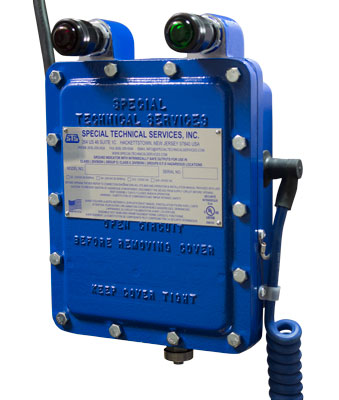
The STS 300 System provides continuous verification that the ground path remains intact throughout all powder handling operations. The moment a ground connection is interrupted or resistance exceeds safe thresholds, our systems automatically signal the interruption. This allows operators to shut down equipment before an electrostatic discharge can occur.

Visual indicator lamps confirm grounded status to operators: green means grounded and safe, red means the ground path is broken. Dual interlocking dry contacts provide fail-safe permissive control that integrates with existing process controls. Our support team helps with system selection and installation guidance.
Continuous ground path monitoring throughout all operations
Automatic status indication when ground is interrupted
NEMA 7, 8, and 9 explosion-proof enclosures for Class II dust environments
Dual interlocking dry contacts for permissive control integration
Visual status confirmation via indicator lamps
Multiple power options: 12VDC, 24VDC, 120VAC, 240VAC
Multipoint configurations for complex equipment assemblies

Recommended Products for Grain and Powder Processing

These STS products are selected for grain and powder processing applications where continuous ground monitoring and explosion-proof construction are required to protect against static buildup hazards..
Ground Monitoring System

STS 300 Ground Monitoring System

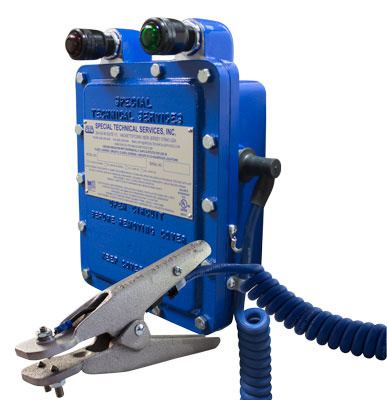
The STS 300 provides continuous ground path monitoring with automatic shutdown capability. It verifies ground resistance stays below 10 ohms and gives clear visual status indication throughout operations. The system uses dual dry contacts for integration with pumps, valves, and PLCs.
Ground Monitoring System

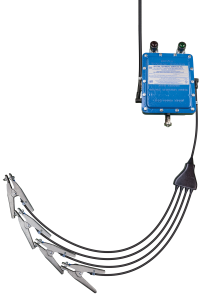
STS 300 Multipoint Grounding System

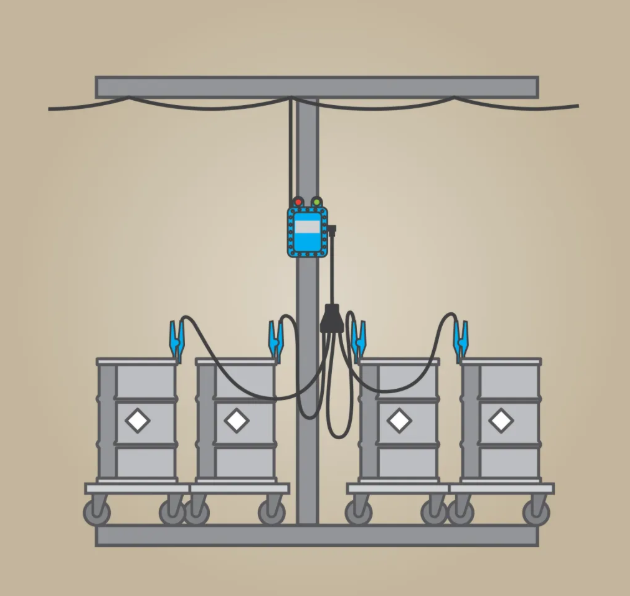
The multipoint version monitors multiple ground connections from a single control unit. This configuration works well for facilities with several industry-specific equipment, [e.g., "loading positions," "processing stations," "fill points"] that need simultaneous ground verification.
Grounding Clamps

K78160A Grounding Clamp

Heavy-duty aluminum grounding clamp designed for secure attachment to tanks, containers, and process equipment. Sharp contact points penetrate paint, rust, and product buildup for reliable metal-to-metal contact.
Magnetic Grounding

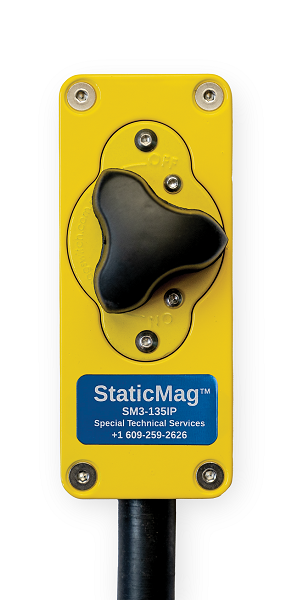
StaticMag™

Quick-attach magnetic grounding device with strong neodymium magnets for fast connection to ferrous metal surfaces. Ideal for curved surfaces like storage drums and cylindrical equipment where traditional clamps cannot grip securely.

Technical Specifications for Grain and Powder Applications

All specifications comply with NFPA 652-654 and related combustible dust safety standards.

Specification STS 300 Series Chemical Processing Requirement
Equipment Rating Class I, Div 1 Group D & Class II Div 1 Group E,F&G Explosion-proof per NFPA 70 Class I, Division 1/2
Ground Resistance Threshold Less than 10 ohms Not exceeding 10 ohms per NFPA 77
Power Options 12VDC, 24VDC, 120VAC, 240VAC Varies by facility electrical power systems
Operating Temperature -40°F to +130°F (-40°C to +55°C) Standard chemical plant environments
Cable Length Options 10 to 100+ feet Application dependent
Response Time Less than 1 second Immediate shutdown required
Contact Rating Dual dry contacts, 15A @ 120VAC Integration with pumps, PLCs, and remote terminal units
Enclosure Material Cast aluminum, powder coated Resists dust and humidity

Built to Meet Combustible Dust Safety Standards

NFPA 652-654 & 484

Standards for combustible dust fundamentals and explosion prevention. These codes cover dust hazard analysis and grounding requirements for powder handling facilities.

NEMA 7/8/9 Rated

Explosion-proof enclosures for Class II dust hazardous location installation. These ratings apply to environments with combustible dust at hazardous levels.

ISO 9001:2015 Certified

Quality management system certification for manufacturing.

Made in USA

100% American manufacturing in Budd Lake, New Jersey.

Additional Standards Referenced

NFPA 61 (Agricultural and Food Processing); NFPA 77 (Static Electricity); OSHA 29 CFR 1910.272 (Grain Handling Facilities); NFPA 70 (National Electrical Code) Class II, Division 1, Groups E, F and G.

Common Questions About Grain and Powder Processing Grounding

NFPA 652-2019 requires facilities to complete a Dust Hazard Analysis. This analysis identifies where combustible dust hazards exist and what controls are needed. Grounding addresses the ignition source element of the dust pentagon. The DHA determines which equipment needs grounding, monitoring requirements, and inspection frequencies. STS systems help meet DHA recommendations for static control at research facilities, powder refineries, and industrial markets operations.
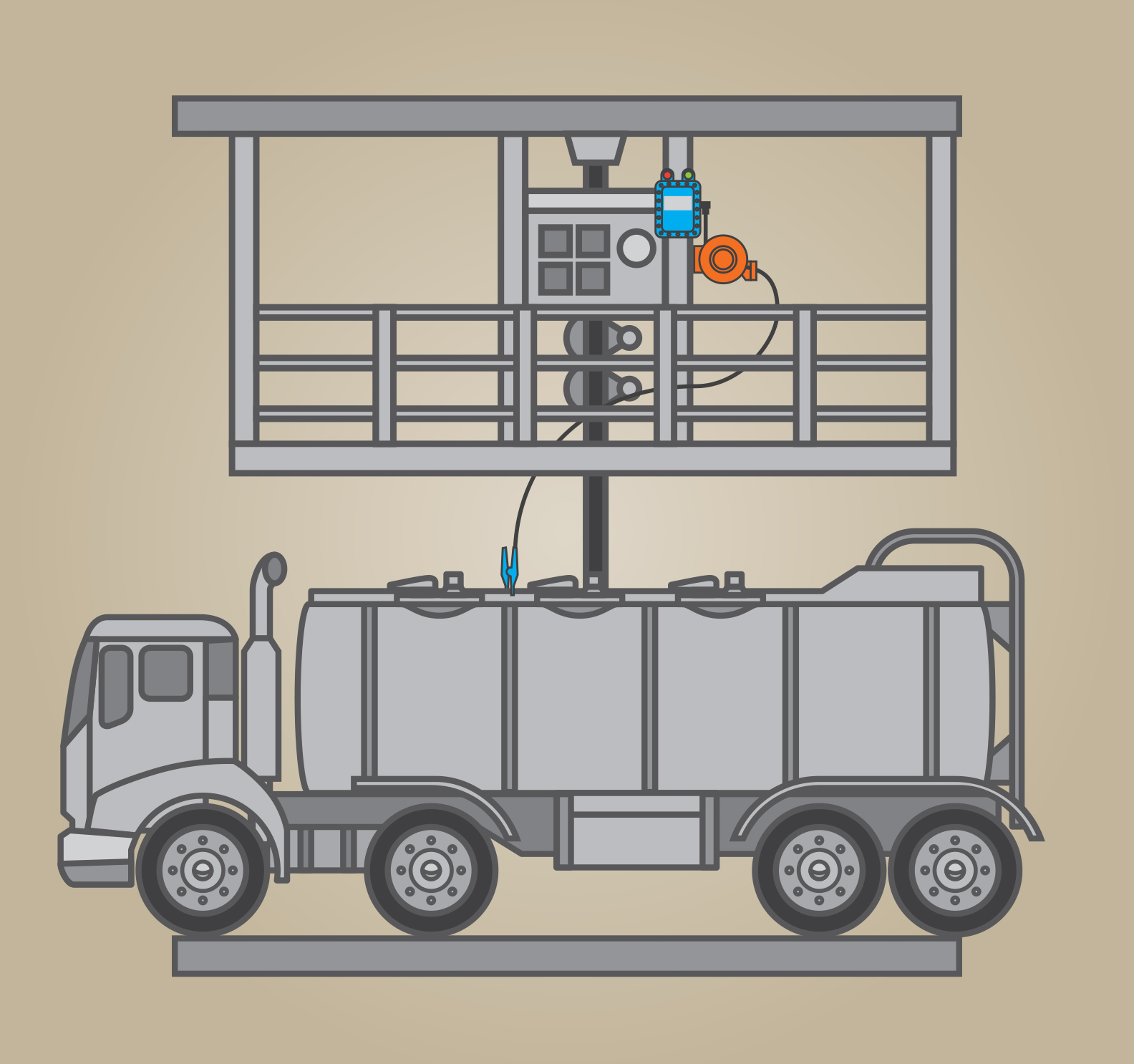
Bucket elevators, horizontal conveyors, pneumatic conveying lines, augers, silos, hoppers, bins, mixers, blenders, sifters, dust collectors, and HEPA filter housings all require grounding. Industrial pneumatic vacuums and any equipment that contacts moving powder should be bonded to an earth ground. Even tanker truck loading points need verified grounding during bulk transfer operations.
NFPA 77 recommends regular visual inspections of grounding cables, clamps, and connections. Resistance checks with an ohmmeter should verify continuity at least monthly. Before each shift in high-risk areas, operators should confirm clamps make good metal-to-metal contact. Document all inspections to meet OSHA record-keeping requirements.
Grounding controls the ignition source element of the dust pentagon. Complete explosion prevention requires addressing all five elements through proper housekeeping, dust collection, equipment design, and operational procedures. STS ground monitoring systems work alongside ventilation systems, HEPA filters, and other controls as part of a complete safety program.
Yes. The same grounding principles apply to pharmaceutical plants handling tablet compression powders, food facilities processing flour and spices, and operations working with personal care ingredients. STS equipment features sanitary design options suitable for these regulated environments. Our support team can recommend configurations for specific process efficiency requirements.
If the STS 300 system detects a ground path interruption, the indicator lamp changes from green to red immediately. The dual dry contacts change state, which can trigger alarms or shut down connected equipment. This fail-safe design means any system malfunction defaults to a warning condition rather than falsely indicating a safe ground.
STS systems require less maintenance than traditional grounding cables because they monitor themselves continuously. Periodic visual inspection of cables and clamps confirms physical condition. The monitoring display shows ground path status at all times, so there is no need for manual resistance checks during normal operation. Clamp contact points should be cleaned if resistance readings increase. Replace cables that show wear or damage to maintain system integrity.

Explore Other Industries We Serve

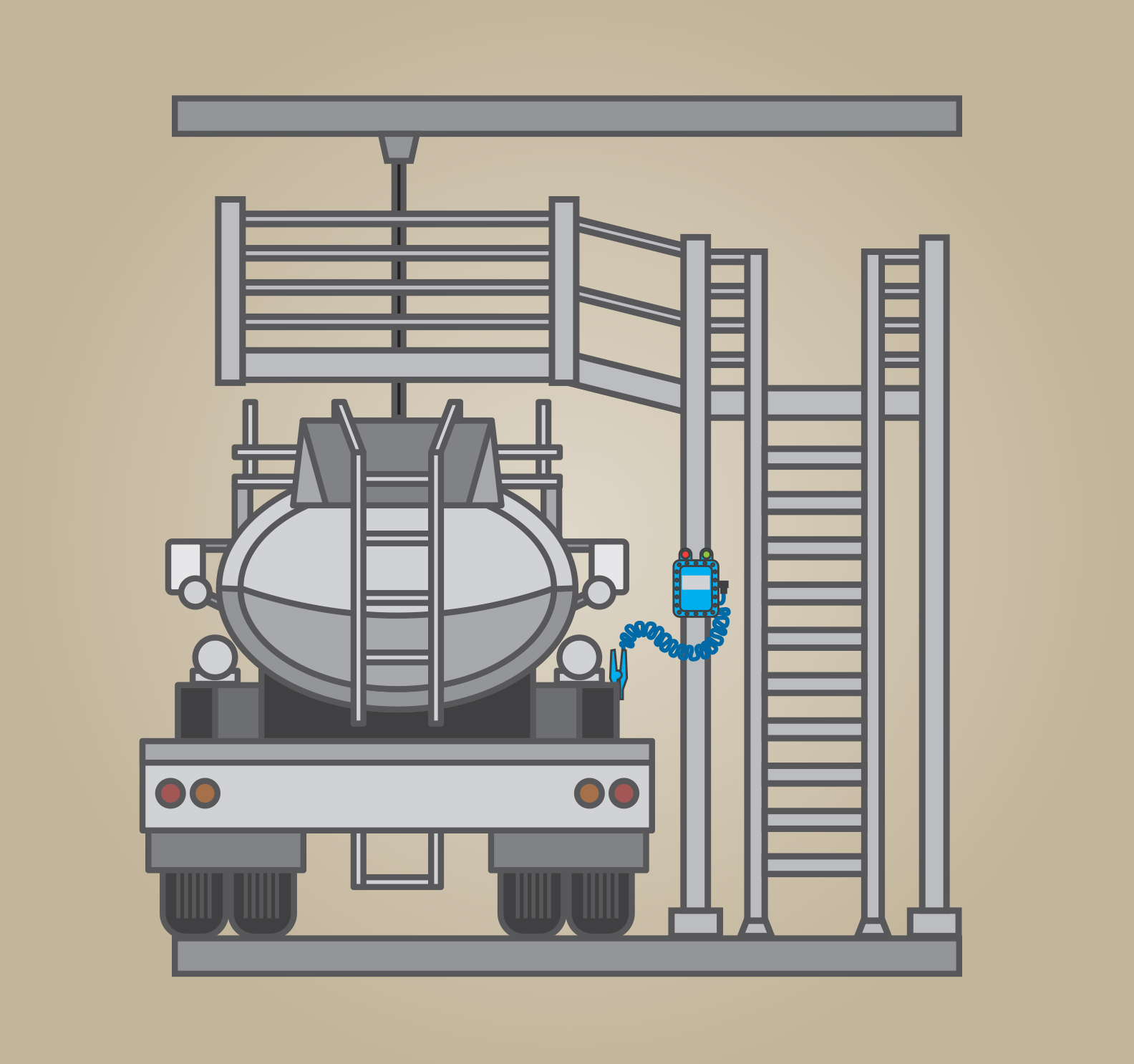
We provide static grounding solutions across many hazardous industries including petroleum refining, rail car operations, vacuum trucks, and grain processing.
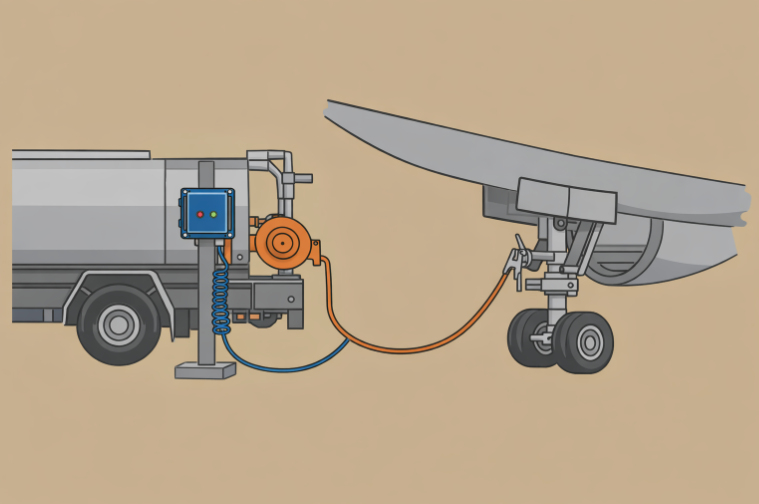
Jet Fuel Fill Station Grounding Systems
(STS) Special Technical Services- Rail Car Fill Stations Graphic

Rail Car Fill Station Static Grounding Systems
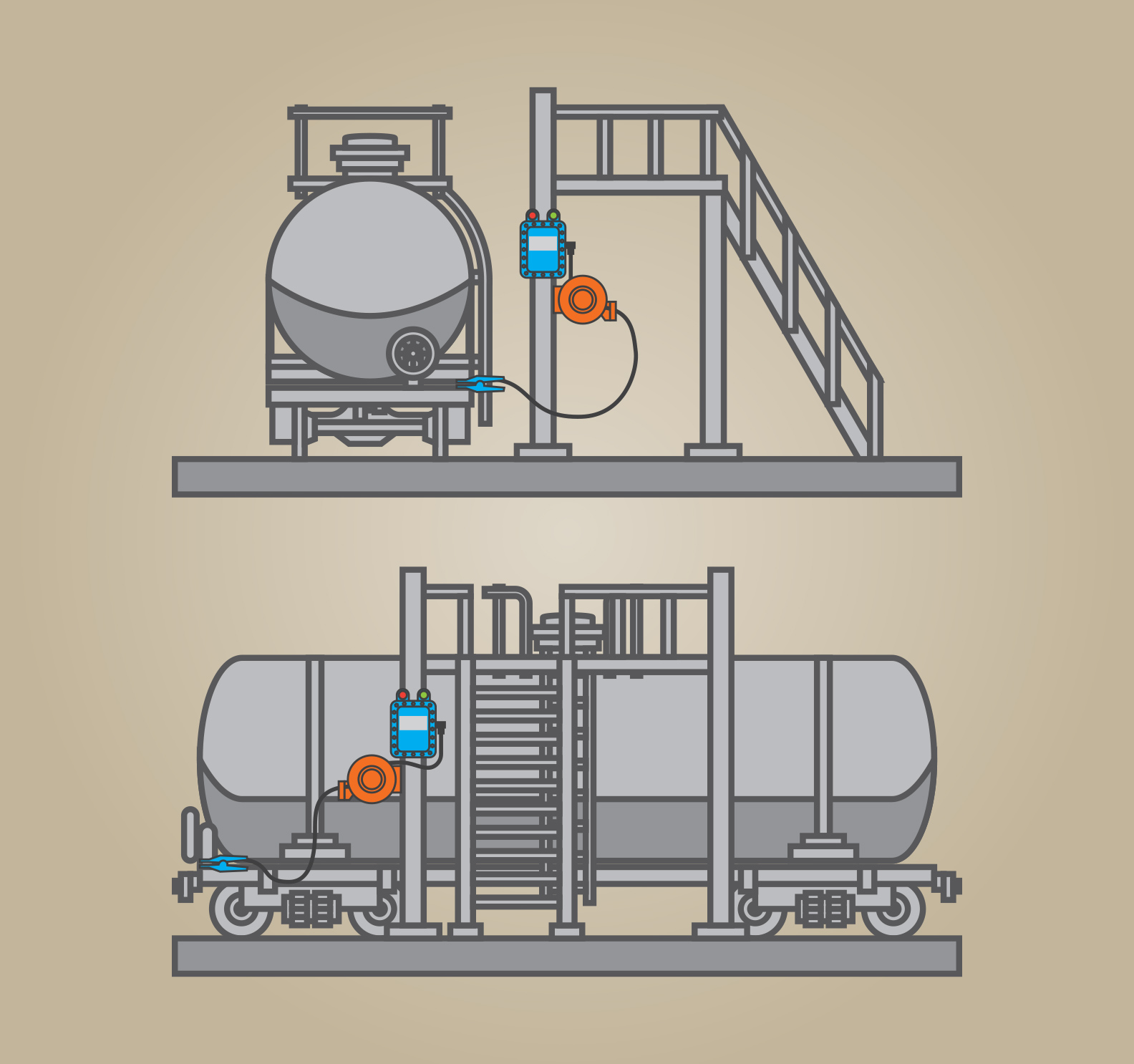
(STS) Special Technical Services - Petroleum Refining Graphic

Vacuum Truck Grounding Systems

Marine Grounding Systems for Barge and Ship Operations
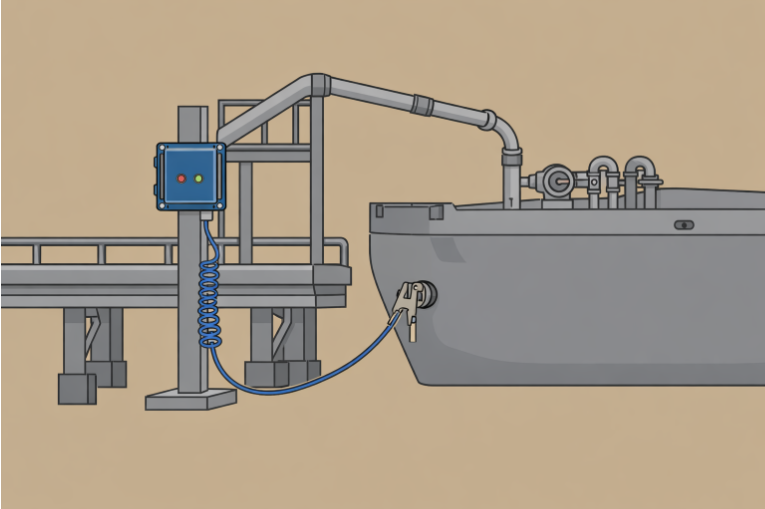
(STS) Special Technical Services Multipoint Grounding Station

Oil Rig Grounding Systems

(STS) Special Technical Services - Batch Processing Graphic

Petroleum Refinery Static Grounding Systems
Paper Manufacturing Static Grounding Systems
Food and Beverage Static Grounding Systems
Chemical Processing Static Grounding Systems

Ready to Protect Your Chemical Processing Operations?

Contact Special Technical Services for expert guidance on static grounding solutions built for chemical processing facilities. Our team can help you select the right ground monitoring system for your application.