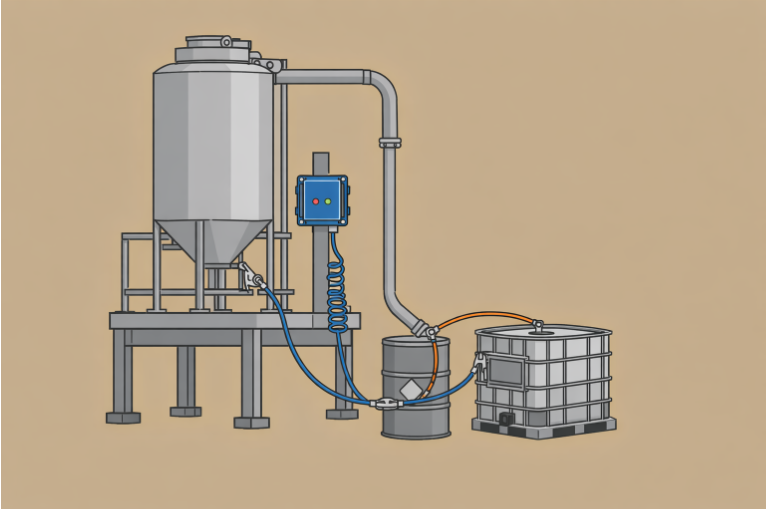

Paper Manufacturing Static Grounding Systems

Paper mills produce millions of tons of products each year across facilities where static electricity can hide in many areas. Moving paper webs, rotating rollers, and airborne dust create conditions where a single spark can start a fire. Special Technical Services provides ground monitoring systems that protect paper manufacturing operations from static discharge hazards.
Hero Image
Home  /  Industries  /  Paper Manufacturing Static Grounding Systems

Static Grounding Solutions for Paper Mill Operations

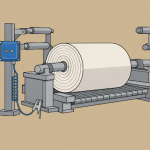
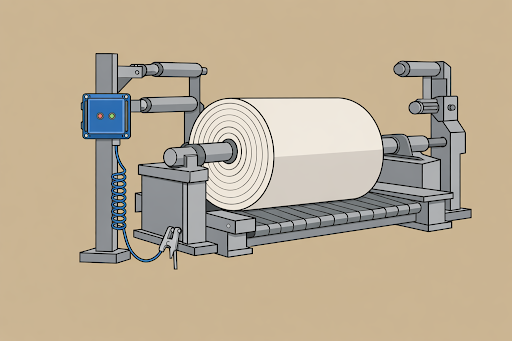
Paper manufacturing involves many processes that generate static electricity. Paper webs travel at high speeds over metal rollers, and this friction builds up electrostatic charges across the entire production line. Rewinding, slitting, and converting operations add more charge buildup. Without proper grounding devices, these charges can discharge as sparks that ignite combustible paper dust and fibers.

Static discharge hazards in paper mills can lead to fires that spread quickly through stored rolls and broke piles. Production shutdowns from fire damage result in costly repairs and unplanned downtime that impacts the entire industrial plant.

Special Technical Services delivers static discharge protection equipment designed for paper mill environments. When a ground connection fails, our systems trigger automatic shutdown of equipment before an ignition of dust particles can occur. With over 50years of experience, STS equipment protects paper mills, distribution centers, and converting facilities across North America.

Quick Facts: Paper Mill Safety

Paper dust ignites at low energy levels
NFPA 77: Recommended practice for static electricity control
NFPA 652: Standard on combustible dust fundamentals

Static Electricity Hazards in Paper Manufacturing

Paper mills face several static electricity challenges that require static discharge mitigation systems.

Default Icon

High-Speed Paper Webs Build Static Charges

Paper machines can run at speeds up to 3,000 feet per minute or faster. The paper web contacts dozens of rollers as it moves from the wet end to the dry end. Each contact point generates static electricity through friction. Tissue mills experience even higher charge buildup because of their lighter paper grades. A Midwest paper mill reported that every new VFD-controlled fan motor needed testing for shaft voltage before installation.
Default Icon

Combustible Dust Creates Fire Risks

Paper dust forms whenever sheets are cut, slit, or trimmed. This dust settles on equipment, lighting panel boards, and floor surfaces. It also becomes airborne during normal operations. Suspended dust at certain concentrations can ignite from a static spark. The same risk exists near broke piles where paper scraps accumulate. Static electricity passing through dust filled contaminated environments increases ignition risk.
Default Icon

Multiple Production Areas Need Protection

A typical paper mill has many zones where static grounding is needed. The paper machine itself requires bonding at multiple points. Winders and rewinders present separate static hazards. Coating and finishing lines add chemical applications that may include flammable solvents. Conveyor systems moving raw materials and finished goods also build up charges. Each area needs equipment grounding conductors connected to a verified ground path.
Default Icon

Traditional Grounding Provides No Feedback

Standard grounding cables connect equipment to earth ground. They work when properly installed and maintained. The problem is that cables can become damaged, corroded, or disconnected without warning. Operators have no way to know if the ground path is intact. STS systems solve this problem by monitoring low-resistance connections to ground at all times.
Default Icon

Large Facilities Make Manual Checks Difficult

Paper mills spread across many acres. Checking every grounding connection by hand takes significant labor costs and operator involvement. Equipment may sit idle during inspections. Real-time monitoring eliminates this problem by providing ground path status from a central location.

How Special Technical Services Protects Paper Mill Operations

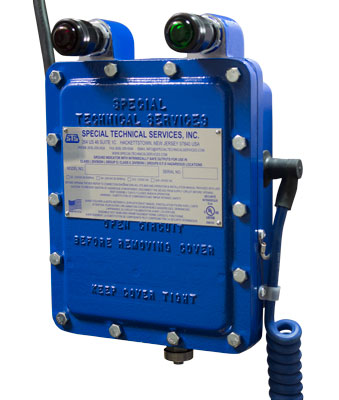
The STS 300 Series verifies that ground connections remain intact throughout paper production. The moment a ground path fails, our systems signal the problem and can shut down equipment before a static discharge occurs.

Unlike passive grounding cables, STS monitoring systems verify protection in real time. Visual indicator lamps show grounded status to operators: green means the ground path is good, red means the ground connection has failed. Dual interlocking dry contacts integrate with existing drive control systems, safety interlocks and/or remote annunciation.
Automatic equipment shutdown when ground is interrupted
NEMA 7, 8, and 9 explosion-proof enclosures for hazardous locations
Dual interlocking dry contacts for permissive control integration
Visual status confirmation via indicator lamps
Multiple power options: 12VDC, 24VDC, 120VAC, 240VAC
Cable lengths from 10 to 100+ feet for various equipment configurations

Recommended Products for Paper Manufacturing

These STS products address static grounding needs in paper mill environments where continuous operations are required to protect against static buildup hazards.
Ground Monitoring System

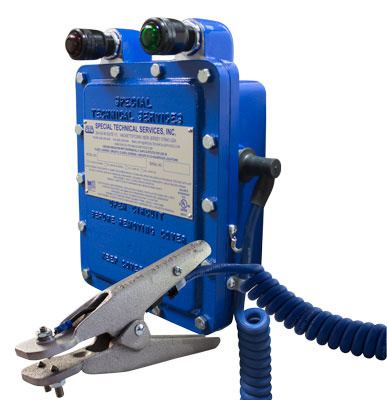
STS 300 Ground Monitoring System

The STS 300 provides continuous ground path monitoring with automatic shutdown capability. It verifies ground resistance stays below 10 ohms and gives clear visual status indication throughout operations. The system uses dual dry contacts for integration with pumps, valves, and PLCs.
Ground Monitoring System

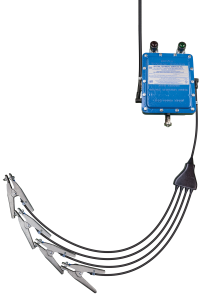
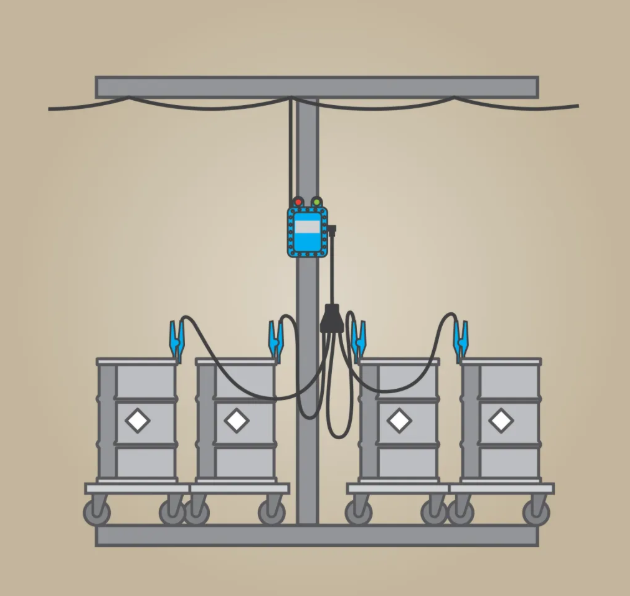
STS 300 Multipoint Grounding System

The multipoint version monitors multiple ground connections from a single control unit. This configuration works well for facilities with several industry-specific equipment, [e.g., "loading positions," "processing stations," "fill points"] that need simultaneous ground verification.
Grounding Clamps

K78160A Grounding Clamp

Heavy-duty aluminum grounding clamp designed for secure attachment to tanks, containers, and process equipment. Sharp contact points penetrate paint, rust, and product buildup for reliable metal-to-metal contact.
Magnetic Grounding

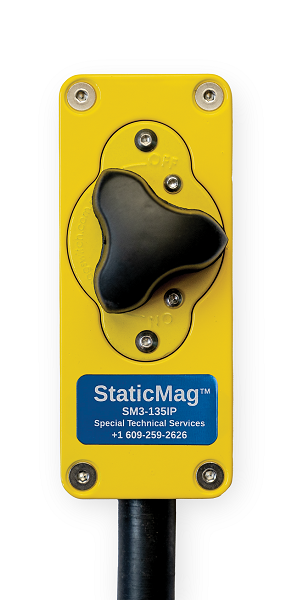
StaticMag™

Quick-attach magnetic grounding device with strong neodymium magnets for fast connection to ferrous metal surfaces. Ideal for curved surfaces like storage drums and cylindrical equipment where traditional clamps cannot grip securely.

Technical Specifications for Paper Mill Applications

All specifications support NFPA 77 guidelines and paper industry safety requirements.

Specification STS 300 Series Paper Industry Requirement
Equipment Rating Class I, Div 1 Group D & Class II Div 1 Group E,F&G Explosion-proof for Class II dust locations
Ground Resistance Threshold Less than 10 ohms Per NFPA 77 recommendations
Power Options 12VDC, 24VDC, 120VAC, 240VAC Matches common mill power systems
Operating Temperature -40°F to +130°F (-40°C to +55°C) Suitable for mill environments
Cable Length Options 10 to 100+ feet Based on equipment spacing
Response Time Less than 1 second Fast response for spark prevention
Contact Rating Dual dry contacts, 15A @ 120VAC Integration with mill control systems
Enclosure Material Cast aluminum, powder coated Resists dust and humidity

Built to Meet Paper Industry Standards

NFPA 77 Compliant

Recommended practice on static electricity addresses charge generation, accumulation, and discharge in industrial settings.

NEMA 7/8/9 Rated

Explosion-proof enclosures for hazardous location installation. NEMA 9 ratings apply specifically to Class II locations with combustible dust.

ISO 9001:2015 Certified

Quality management system certification for manufacturing processes.

Made in USA

100% American manufacturing in Budd Lake, New Jersey.

Additional Standards Referenced

NFPA 652 (Combustible Dust Fundamentals); NFPA 70 (National Electrical Code) Class II, Division 1/2; OSHA 1910.261 (Pulp, Paper, and Paperboard Mills); OSHA 1910.307 (Hazardous Locations); API RP 2003 (Protection Against Ignitions).

Common Questions About Paper Mill Static Grounding

STS equipment connects to earth ground and checks for a low resistance path. The system measures resistance between the grounding clamp and earth ground point. When resistance stays below the set threshold (typically 10 ohms or less), the green indicator confirms a safe ground connection. If resistance rises above the threshold or the connection breaks, the system signals an alarm and can shut down equipment automatically.
Electric motors controlled by variable frequency drives can develop shaft voltage that damages motor bearings. This voltage passes through the bearings and creates pitting on the bearing surfaces. Over time, this electrical bearing damage leads to motor failure. Shaft grounding diverts this current safely to ground. A reliability engineer should test motor shaft currents on new installations to determine if additional protection is needed.
STS systems require less maintenance than traditional grounding cables because they monitor themselves continuously. Periodic visual inspection of cables and clamps confirms physical condition. The monitoring display shows ground path status at all times, so there is no need for manual resistance checks during normal operation. Clamp contact points should be cleaned if resistance readings increase. Replace cables that show wear or damage to maintain system integrity.
STS ground monitoring systems respond in less than one second when a ground path is interrupted. The system continuously checks the resistance between the grounding clamp and earth ground. When the connection breaks or resistance exceeds the set threshold, the indicator lamp changes from green to red. The dual dry contacts change state at the same time, which can trigger automatic shutdown of connected equipment. This fast response helps prevent static discharge before a spark can occur.
Yes. STS ground monitoring systems include dual dry contacts rated at 15A at 120VAC. These contacts wire into safety interlock circuits, programmable logic controllers, or building automation and SCADA systems. When the ground path fails, the contacts change state and signal the connected control system. This integration supports compliance management, audit workflows, and safety documentation requirements.

Explore Other Industries We Serve

We provide static grounding solutions across many hazardous industries including petroleum refining, rail car operations, vacuum trucks, and grain processing.
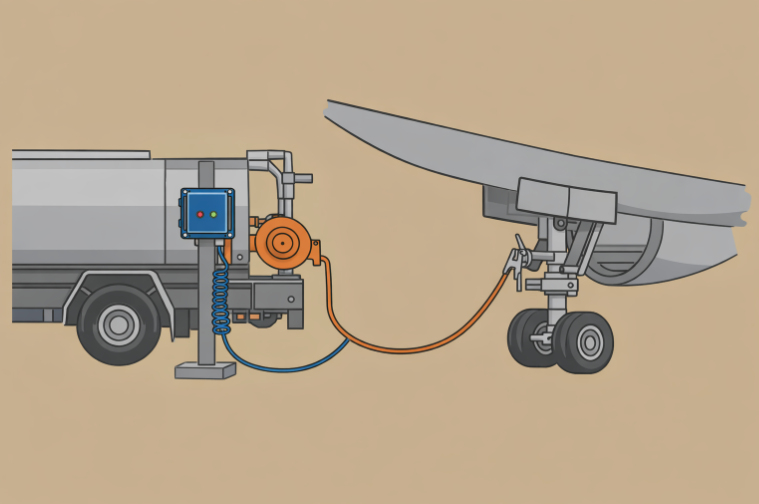
Jet Fuel Fill Station Grounding Systems
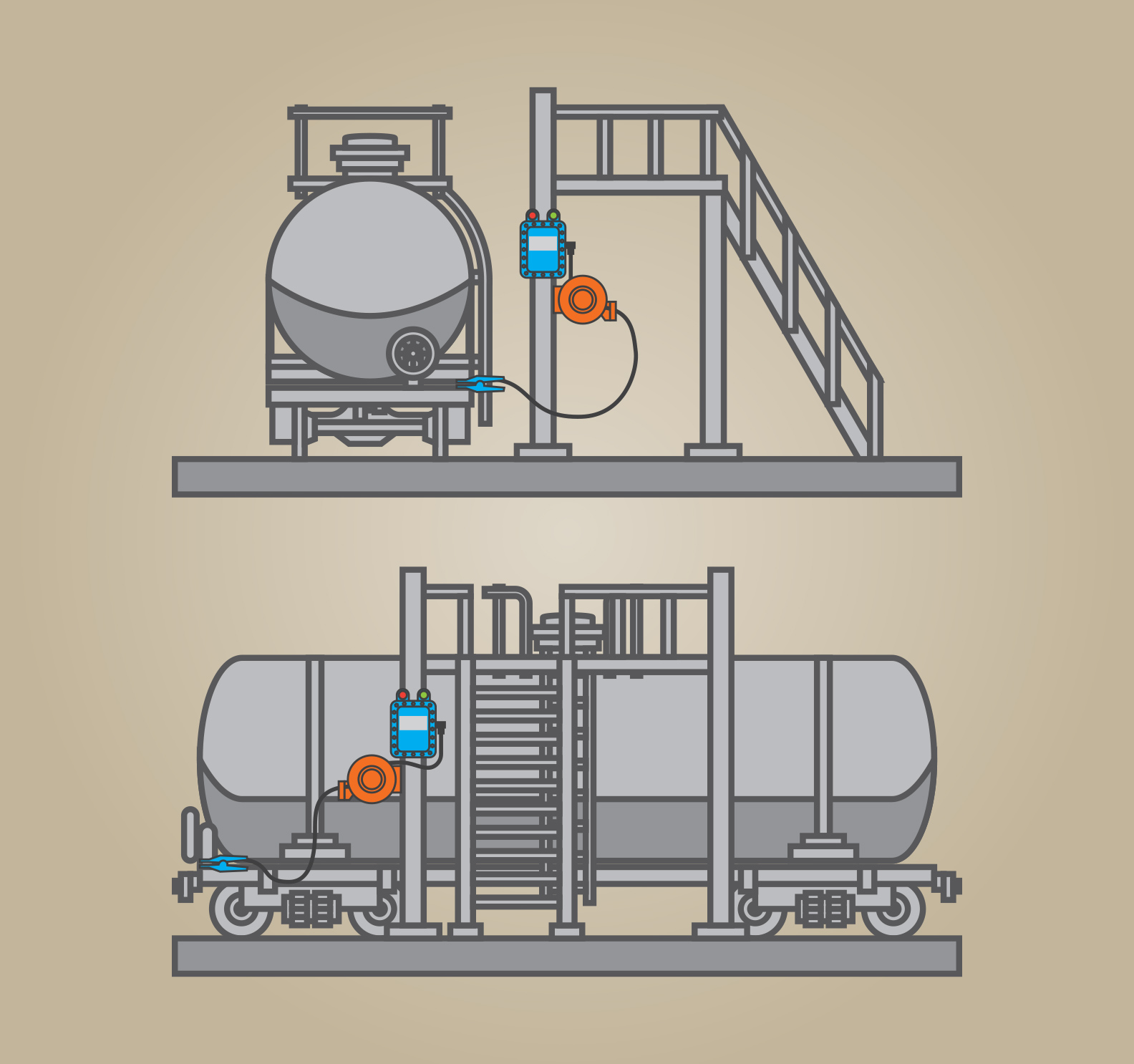
(STS) Special Technical Services- Rail Car Fill Stations Graphic

Rail Car Fill Station Static Grounding Systems
(STS) Special Technical Services - Petroleum Refining Graphic

Vacuum Truck Grounding Systems

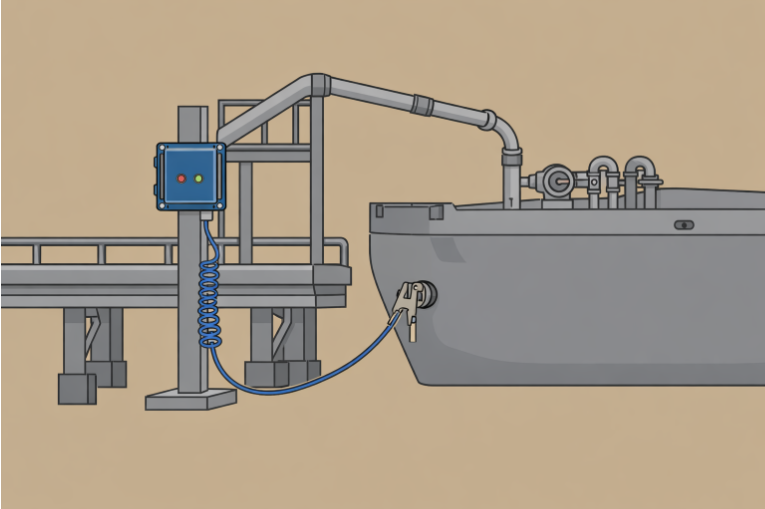
Marine Grounding Systems for Barge and Ship Operations

(STS) Special Technical Services Multipoint Grounding Station

Oil Rig Grounding Systems

Grain & Powder Processing Static Grounding Systems
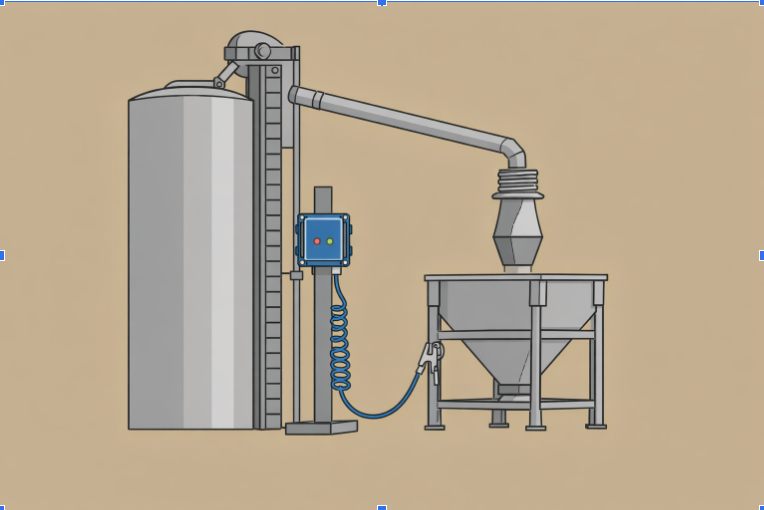
(STS) Special Technical Services - Batch Processing Graphic

Petroleum Refinery Static Grounding Systems
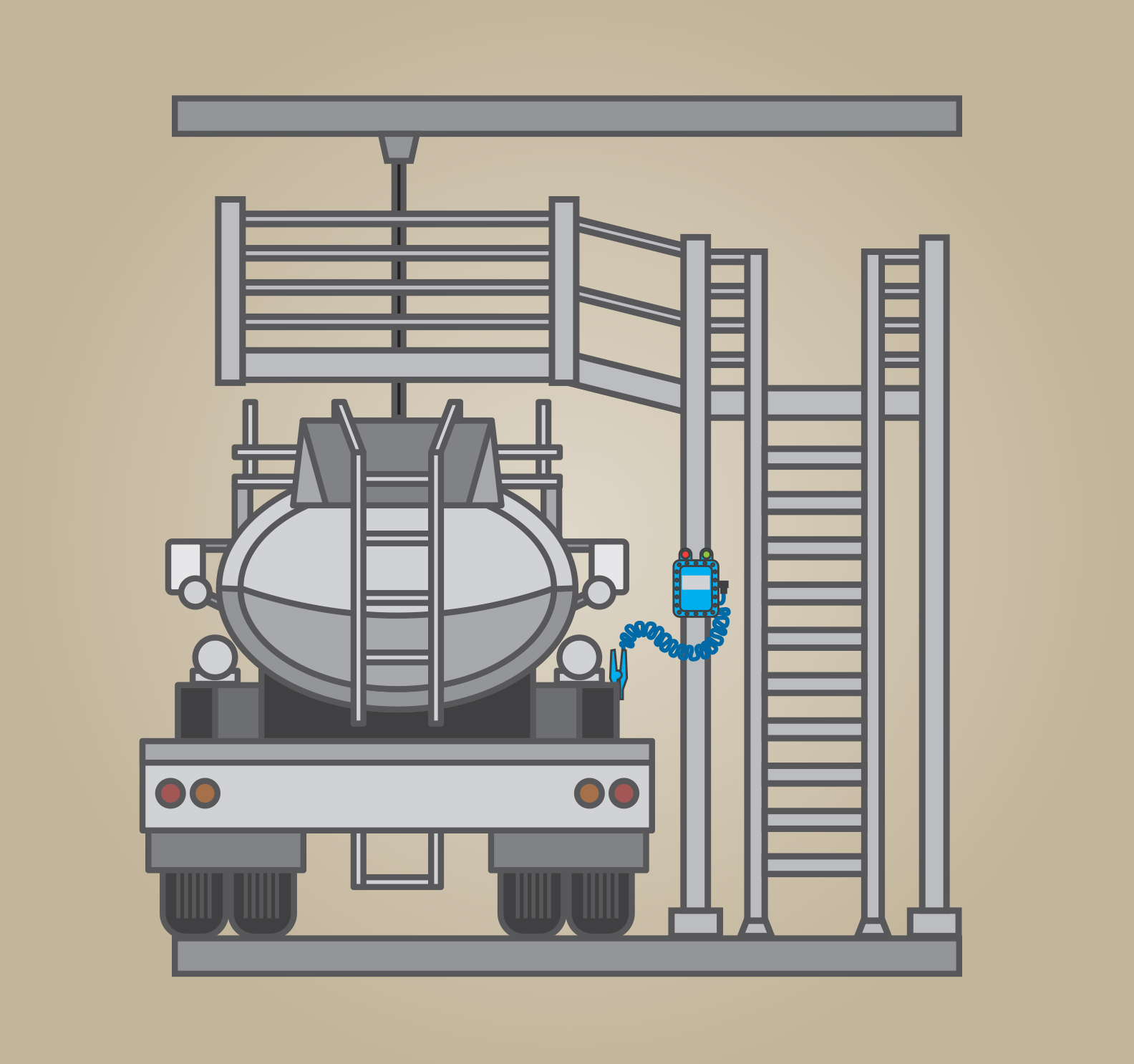
Food and Beverage Static Grounding Systems
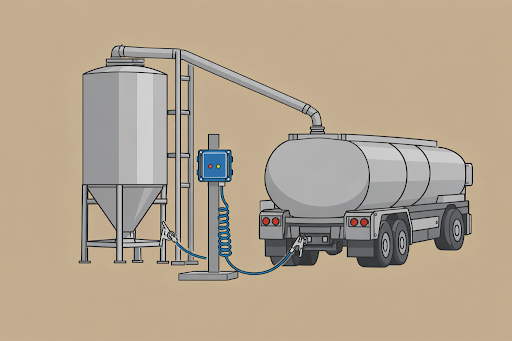
Chemical Processing Static Grounding Systems

Ready to Protect Your Chemical Processing Operations?

Contact Special Technical Services for expert guidance on static grounding solutions built for chemical processing facilities. Our team can help you select the right ground monitoring system for your application.