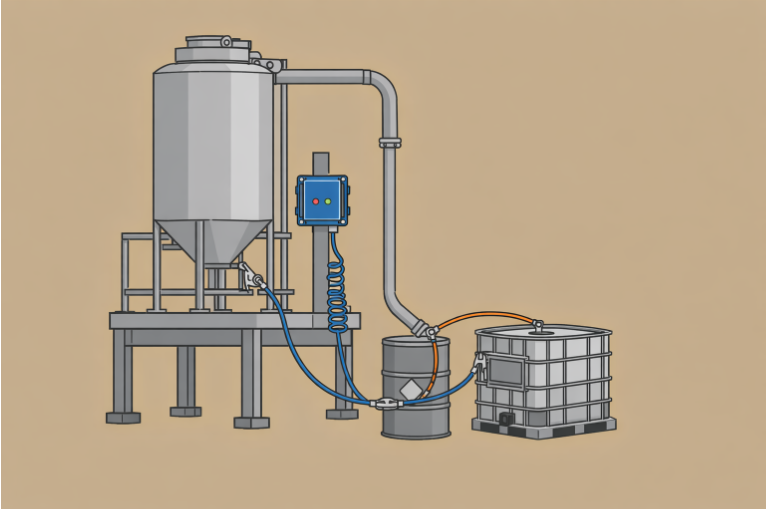

Petroleum Refinery Static Grounding Systems

Oil and gas refineries process millions of barrels of crude oil into fuel every day. Many operations occur during a normal refinery workday, and each one creates static electricity that can ignite flammable vapors. Special Technical Services provides continuous ground monitoring systems that protect refinery personnel and equipment at loading facilities, storage tanks, and processing areas.
Hero Image
Home  /  Industries  /  Petroleum Refinery Static Grounding Systems

Static Grounding Solutions for Oil and Gas Refinery Operations

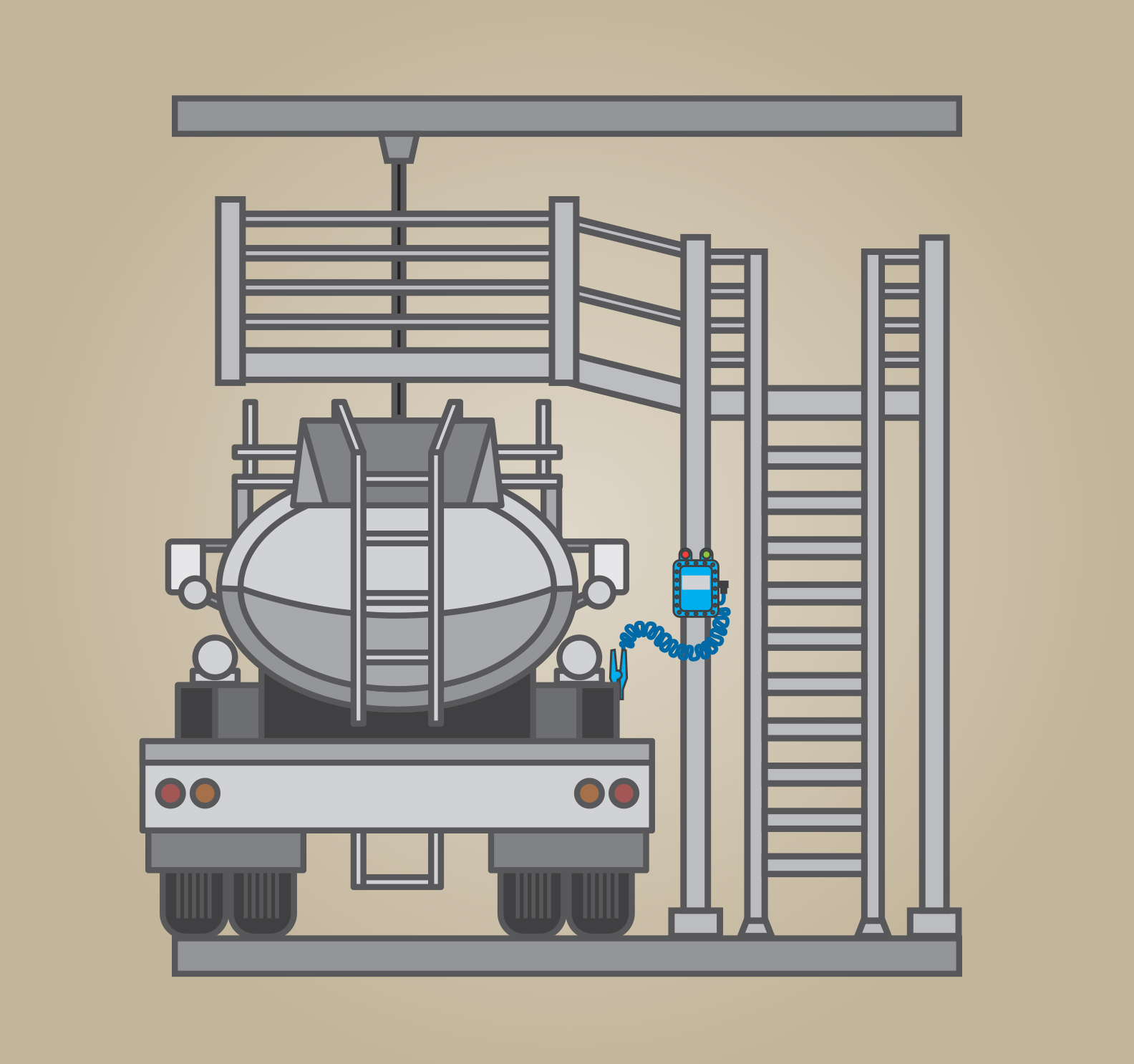
Petroleum refining involves the movement of flammable liquids through every stage of production. Crude oil enters the facility and passes through distillation towers, catalytic cracking units, and vacuum distillation columns. The cracking process breaks hydrocarbon molecules into lighter refinery products like gasoline, diesel, and Liquified Petroleum Gas. Each transfer of these products generates static electricity that must be safely discharged to prevent fires and explosions.

A single spark in the petroleum industry can cause catastrophic damage. Studies by the American Petroleum Institute found that static discharges caused many fires at loading racks and fuel terminals. Tank truck grounding systems failed or were never connected in several incidents. Fires at storage facilities have destroyed equipment worth millions of dollars and injured workers. API RP 2003 and IEC 60079 require verified grounding and bonding for all fuel loading and unloading solutions.

Special Technical Services delivers grounding equipment that meet the strict demands of the petroleum industry. Our STS 300 Ground Monitoring System verifies ground path integrity throughout every transfer operation. With over 50 years of experience and ISO 9001:2015 certified quality management, STS equipment protects refineries, chemical and ethanol storage facilities, and fuel terminals worldwide.

Quick Facts: Petroleum Refining Safety

Only 0.25 millijoules needed to ignite gasoline vapor
API RP 2003: Primary petroleum industry grounding standard
Ground resistance must be less than 10 ohms for static control

Static Electricity Hazards in Petroleum Refining

Refineries face unique static electricity challenges that require specialized grounding solutions. The variety of products, processing temperatures, and handling methods all affect risk levels.

Default Icon

Loading Rack and Fuel Terminal Operations

Tank trucks and rail cars generate static charges during product transfer. High flow rates through filters increase charge generation by 10 to 100 times normal levels. Rack monitors and control units must verify grounding before loading begins. Switch loading presents the greatest danger. This occurs when diesel fuel enters a tank that previously held gasoline. The residual gasoline vapors remain in the flammable range while diesel generates high static charges.
Default Icon

Storage Tank Filling Creates Charge Buildup

Splash filling creates turbulence that builds static charges on the liquid surface. Sparks can jump between the liquid and fill pipe during top loading operations. Process sampling and gauging introduce ungrounded objects into tanks containing flammable vapors. A grounding grid connected to the tank provides a safe although unmonitored path for charge dissipation.
Default Icon

Refinery Products Have Low Conductivity

Gasoline, jet fuel, naphtha, and aromatic compounds retain static charges because they conduct electricity poorly. Products need relaxation time before gauging or sampling. Large storage tanks require 30 minutes of settling time after filling. Products passing through filters during catalytic reforming or sulfur recovery operations build up extreme charges.
Default Icon

Processing Units Present Specific Risks

Fired heaters, heat exchangers, and pressure relief valves handle products at high temperatures. Hydrogen sulfide and sulfur compounds in crude oil create corrosive environments that damage grounding connections. Pyrophoric Iron Sulfide can ignite when exposed to air during maintenance. Reduced crude from vacuum distillation contains heavy compounds that generate static during pumping.
Default Icon

Environmental and Equipment Factors

Cold, dry weather increases static buildup at loading facilities. Lightning protection systems must connect to the grounding grid. Workers wearing personal protective equipment can accumulate charges. Grounding cables become corroded or disconnected during normal operations. Traditional static grounding systems provide no warning when a ground path fails.

How Special Technical Services Protects Petroleum Refining Operations

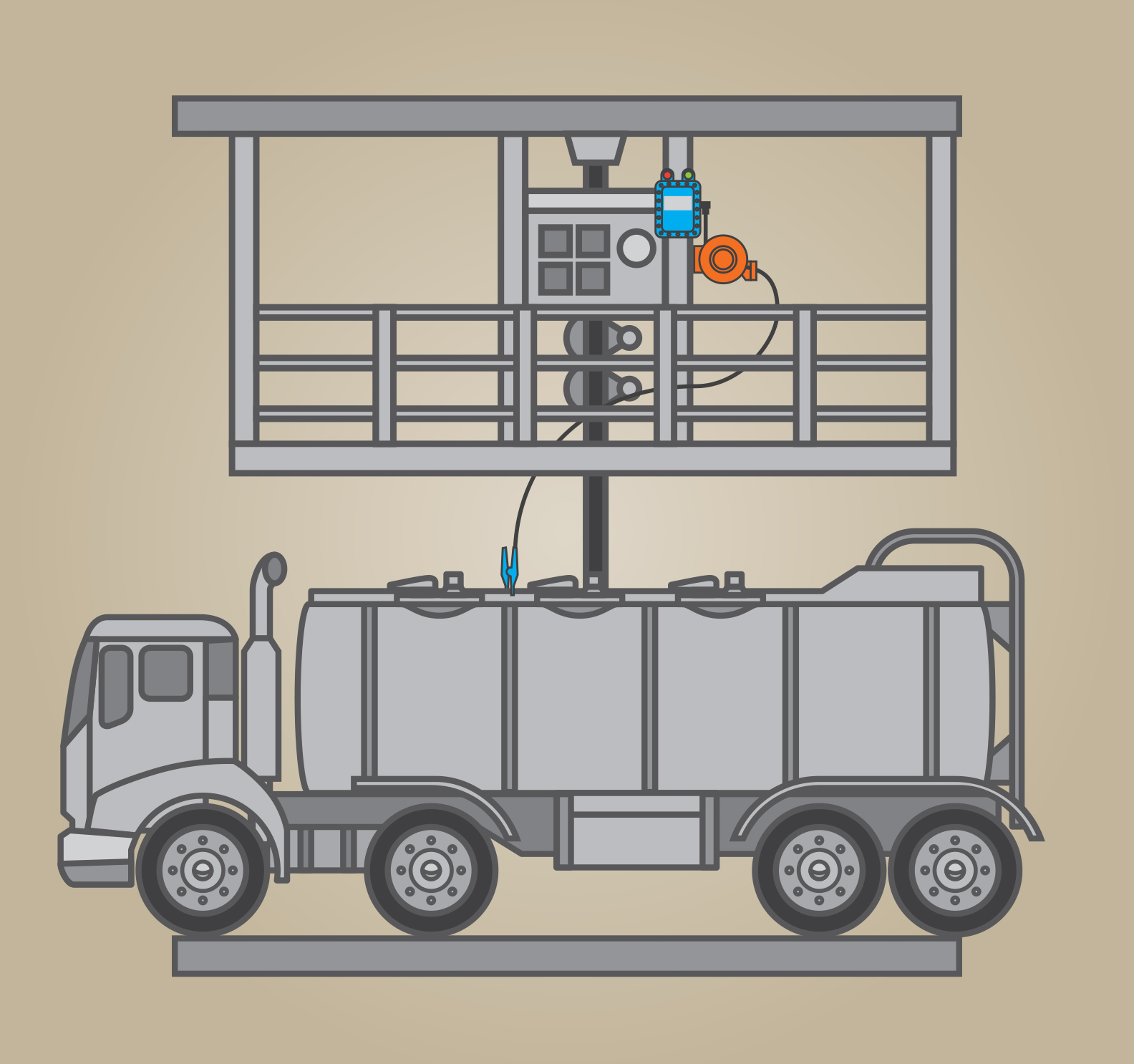
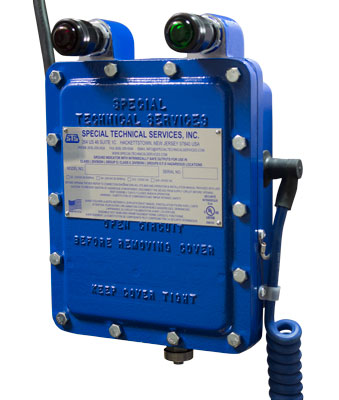
The STS 300 System provides continuous verification that the ground path remains intact throughout product transfer. The moment a ground connection is interrupted or resistance exceeds safe thresholds, our systems automatically shut down pumping equipment before a static discharge can occur.

Unlike simple bonding cables that provide no feedback, STS ground monitoring systems continuously verify that static electricity has a safe path to earth before, during, and after every transfer. Visual indicator lamps confirm grounded status to operators. Green means grounded and safe. Red means the ground path is broken. Dual interlocking dry contacts provide fail-safe permissive control that integrates with existing refinery automation systems.
Continuous ground path monitoring throughout all transfer operations
Automatic equipment shutdown when ground is interrupted
NEMA 7, 8, and 9 explosion-proof enclosures for Class I, Division 1 locations
Dual interlocking dry contacts for permissive control integration
Visual status confirmation via indicator lamps
Multiple power options: 12VDC, 24VDC, 120VAC, 240VAC
Cable lengths from 10 to 100+ feet for various applications

Recommended Products for Petroleum Refining Operations

These STS products are selected for oil and gas refinery applications where explosion-proof construction and verified grounding are required to protect against static buildup hazards..
Ground Monitoring System

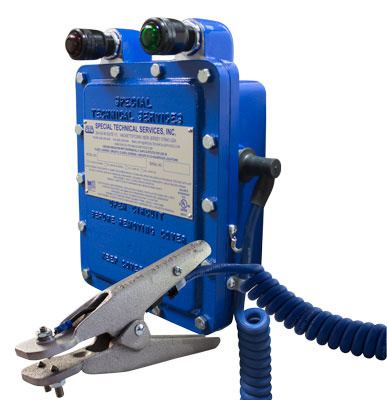
STS 300 Ground Monitoring System

The STS 300 provides continuous ground path monitoring with automatic shutdown capability. It verifies ground resistance stays below 10 ohms and gives clear visual status indication throughout operations. The system uses dual dry contacts for integration with pumps, valves, and PLCs.
Ground Monitoring System

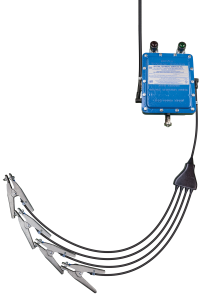
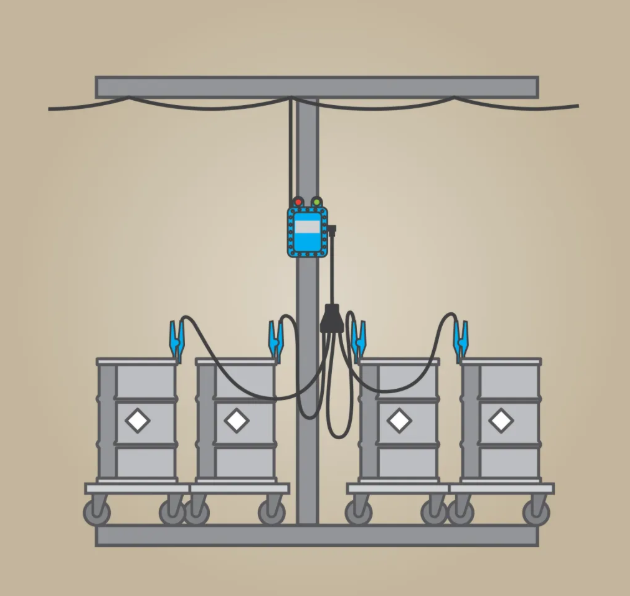
STS 300 Multipoint Grounding System

The multipoint version monitors multiple ground connections from a single control unit. This configuration works well for facilities with several industry-specific equipment, [e.g., "loading positions," "processing stations," "fill points"] that need simultaneous ground verification.
Grounding Clamps

K78160A Grounding Clamp

Heavy-duty aluminum grounding clamp designed for secure attachment to tanks, containers, and process equipment. Sharp contact points penetrate paint, rust, and product buildup for reliable metal-to-metal contact.
Magnetic Grounding

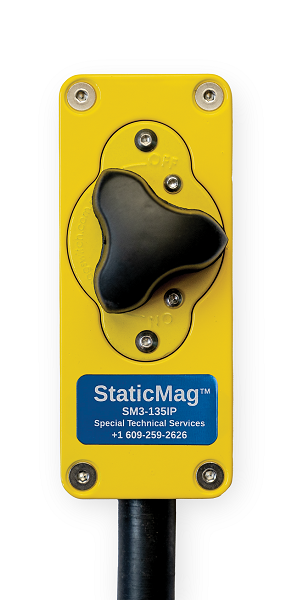
StaticMag™

Quick-attach magnetic grounding device with strong neodymium magnets for fast connection to ferrous metal surfaces. Ideal for curved surfaces like storage drums and cylindrical equipment where traditional clamps cannot grip securely.

Technical Specifications for Petroleum Refining Applications

All specifications comply with NFPA 77 and related chemical processing safety standards.

Specification STS 300 Series Petroleum Refining Requirement
Equipment Rating Class I, Div 1 Group D & Class II Div 1 Group E,F&G Explosion-proof per NFPA 70 Class I, Division 1/2
Ground Resistance Threshold Less than 10 ohms Not exceeding 10 ohms per NFPA 77
Power Options 12VDC, 24VDC, 120VAC, 240VAC Varies by facility electrical power systems
Operating Temperature -40°F to +130°F (-40°C to +55°C) Standard petroleum refining plant environments
Cable Length Options 10 to 100+ feet Varies by applications
Response Time Less than 1 second Immediate shutdown required
Contact Rating Dual dry contacts, 15A @ 120VAC Integration with pumps, PLCs, and remote terminal units
Enclosure Material Cast aluminum, powder coated Corrosion resistant for outdoor use

Built to Meet Petroleum Industry Standards

API RP 2003

Protection Against Ignitions Arising Out of Static, Lightning, and Stray Currents. This recommended practice covers grounding requirements for storage tanks, loading facilities, and processing equipment throughout the petroleum industry.

NEMA 7/8/9 Rated

Explosion-proof enclosures for hazardous location installation. These ratings apply to Class I, Division 1 and Division 2 environments with flammable gases and vapors present.

ISO 9001:2015 Certified

Quality management system certification for manufacturing processes.

Made in USA

100% American manufacturing in Budd Lake, New Jersey.

Additional Standards Referenced

NFPA 77 (Static Electricity); NFPA 30 (Flammable and Combustible Liquids); IEC 60079-32 (Explosive Atmospheres); OSHA 29 CFR 1910.106; API 2219 (Vacuum Trucks in Petroleum Service); NFPA 780 (Lightning Protection).

Common Questions About Petroleum Refining Grounding

Bonding connects two metal objects so they share the same electrical potential. This prevents sparks when a fill nozzle approaches a tank opening or when workers handle metal equipment near flammable vapors. Grounding connects equipment to the earth through a buried electrode. A bonded system without grounding can still accumulate charge. Proper protection requires both bonding between equipment and grounding to earth.
Filters in petroleum transfer lines increase charge generation by 10 to 100 times compared to normal pipe flow. Fine mesh filters create more charge than coarse filters. Products passing through microfilters require longer relaxation times before entering tanks. Locating filters as far upstream as possible from the delivery point gives charges more time to dissipate through the grounded piping system.
Bronze,stainless steel and aluminum resist corrosion and will not spark compared to zinc-plated steel. Refineries handling sour crude with high sulfur content should specify bronze clamps for all grounding connections. Cable jackets should resist oil, fuel, and chemical exposure. Inspect connections monthly in corrosive service areas and replace equipment showing visible deterioration before resistance increases.
Workers should understand why grounding is required and how to verify proper connections before starting transfers. Training should cover clamp attachment to bare metal, visual inspection of cables, and recognition of damaged equipment. Operators need to know that traditional grounding provides no feedback when connections fail. Facilities using monitored grounding systems should train workers on indicator lamp meanings and proper response to fault conditions.
Higher temperatures increase the conductivity of petroleum products, which allows charges to dissipate faster. Cold products retain charges longer and present greater ignition risk. Winter operations at outdoor loading racks face higher static hazards than summer operations. Cold products may need longer relaxation times than the standard 30 minutes specified for ambient temperature conditions.
STS systems require less maintenance than traditional grounding cables because they monitor themselves continuously. Periodic visual inspection of cables and clamps confirms physical condition. The monitoring display shows ground path status at all times, so there is no need for manual resistance checks during normal operation. Clamp contact points should be cleaned if resistance readings increase. Replace cables that show wear or damage to maintain system integrity.

Explore Other Industries We Serve

We provide static grounding solutions across many hazardous industries including petroleum refining, rail car operations, vacuum trucks, and grain processing.
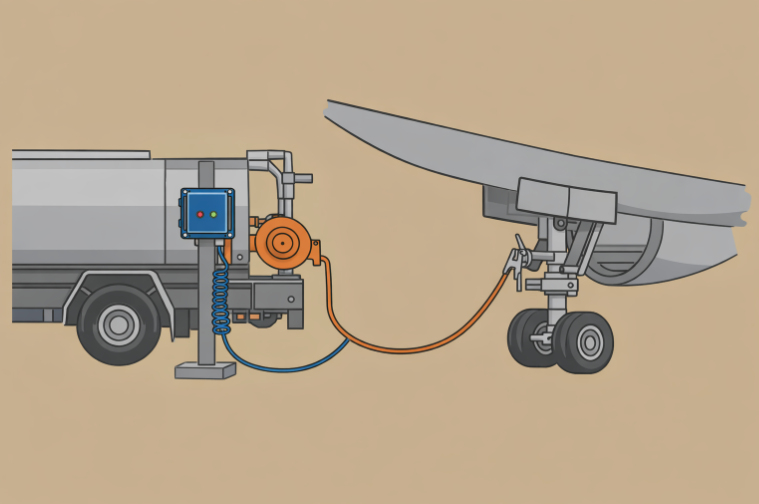
Jet Fuel Fill Station Grounding Systems
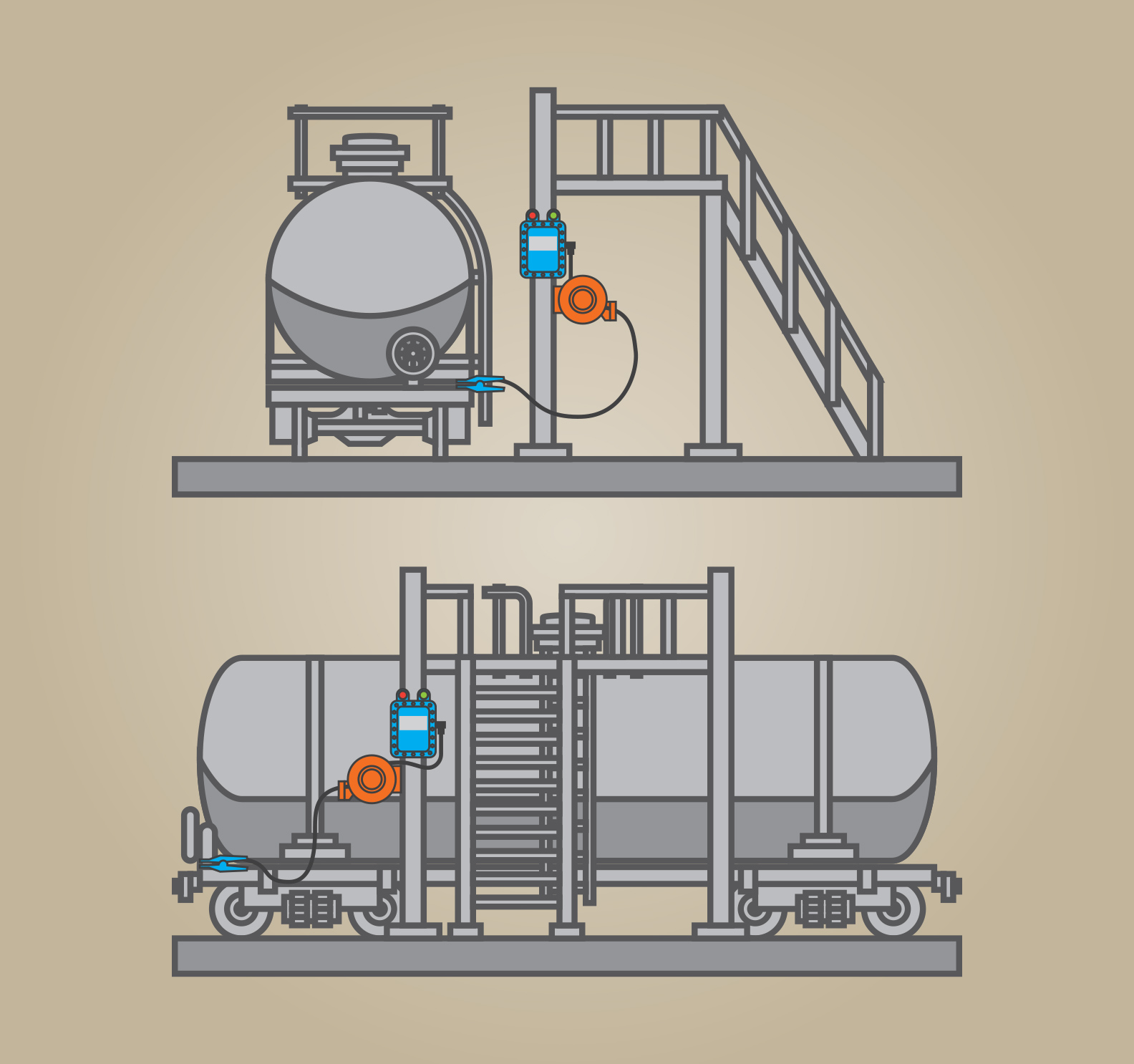
(STS) Special Technical Services- Rail Car Fill Stations Graphic

Rail Car Fill Station Static Grounding Systems
(STS) Special Technical Services - Petroleum Refining Graphic

Vacuum Truck Grounding Systems

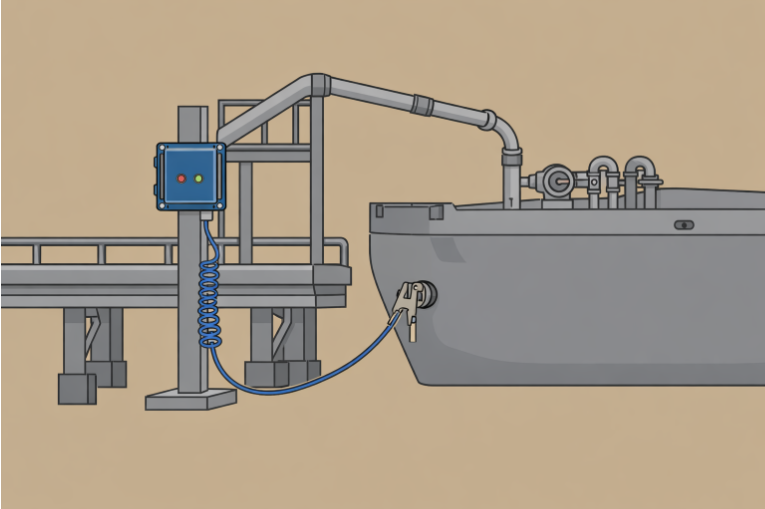
Marine Grounding Systems for Barge and Ship Operations

(STS) Special Technical Services Multipoint Grounding Station

Oil Rig Grounding Systems

Grain & Powder Processing Static Grounding Systems
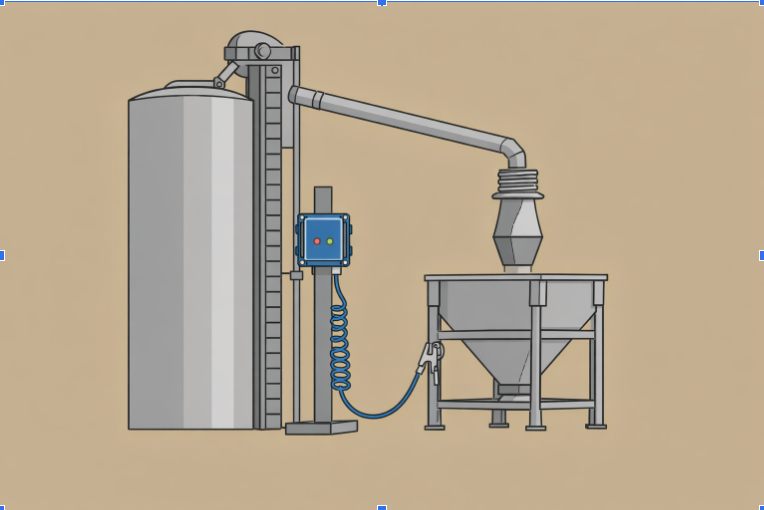
Paper Manufacturing Static Grounding Systems
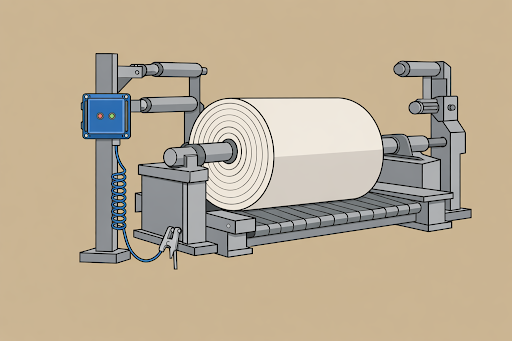
Food and Beverage Static Grounding Systems
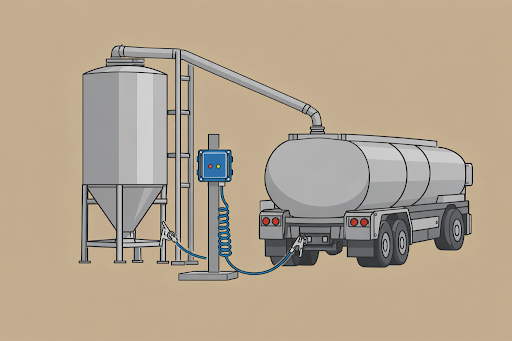
Chemical Processing Static Grounding Systems

Ready to Protect Your Chemical Processing Operations?

Contact Special Technical Services for expert guidance on static grounding solutions built for chemical processing facilities. Our team can help you select the right ground monitoring system for your application.